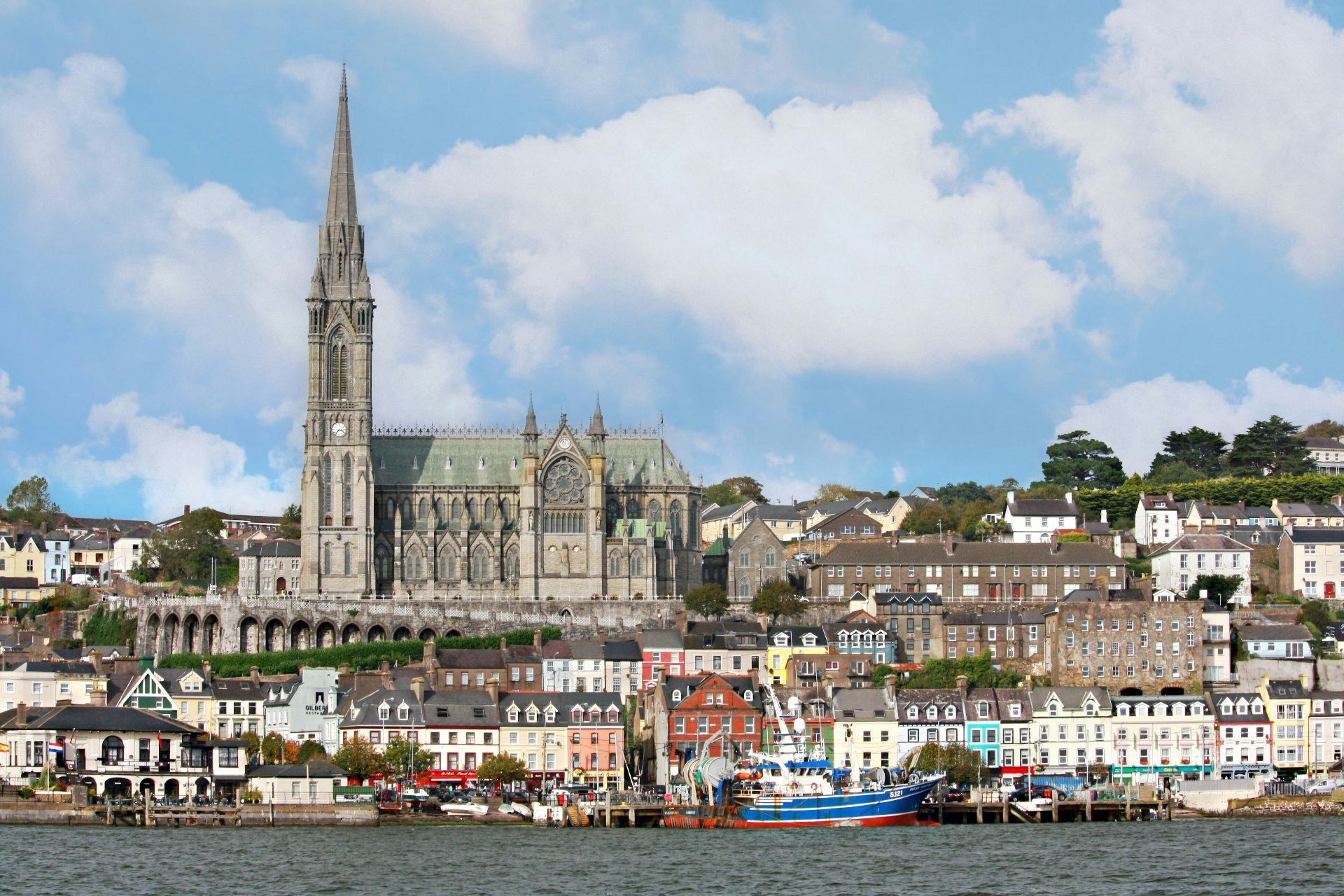
Cobh sits at the mouth of Cork Harbour, on a south-facing slope of an island in the largest natural harbour in Ireland. The cathedral rises above the terraced houses in tiers of colour — red and yellow and blue — and the water below is wide and still and cold. It is one of the most beautiful small towns in Ireland.
It is also one of the most sorrowful.
The Last Sight of Ireland
Between 1845 and 1960, more than three million people left Ireland through Cobh — then called Queenstown, after Queen Victoria who visited in 1849. For most of them, it was the last sight of Ireland they would ever see. They stood on the pier or on the deck of a departing ship and watched the cathedral recede into the distance, and then Ireland was gone.
The ships that left Cobh went to America, to Canada, to Australia. They carried people who had nothing — no money, no possessions worth speaking of, an address in Boston or New York written on a scrap of paper. Many were sick. Many were frightened. All of them were leaving everything they had ever known.
The Famine Ships
The Great Famine of 1845 to 1852 killed one million people in Ireland and caused another million to emigrate in the first years alone. Many of those emigrants left through Cobh on what became known as coffin ships — overcrowded, disease-ridden vessels that sometimes lost a quarter of their passengers before reaching America.
The conditions were appalling. Passengers were packed into dark holds with inadequate food, water and ventilation. Typhus and dysentery spread quickly. Bodies were sometimes thrown overboard before the ships reached port. The crossing could take six weeks or more.
They were between seventeen and thirty years old, mostly. They left with a single bag. They crossed the Atlantic in conditions we would not put cattle in today.
The Titanic's Last Port of Call
On the 11th of April 1912, the RMS Titanic made its last port of call at Cobh — then still called Queenstown. It took on 123 passengers, mostly Irish emigrants traveling third class to America. Seven of them survived. The rest went down with the ship in the North Atlantic three days later.
There is a memorial in Cobh to the Titanic victims. There is also a museum — the Cobh Heritage Centre — housed in the old railway station where emigrants waited for the tenders that would carry them out to the waiting ships. Standing in that building, looking at the photographs and the passenger lists and the letters home, is one of the most moving experiences in Ireland.
What Cobh Looks Like Today
Cobh today is a small, colourful, quietly proud town. The cathedral — St Colman's Cathedral, built between 1868 and 1915 — dominates the skyline. The harbour is busy with pleasure craft and the occasional cruise ship. The streets are full of cafés and small shops and people going about their ordinary lives.
But underneath the ordinary life, the history is always present. The names on the memorial. The old photographs in the heritage centre. The stories that American visitors bring with them when they come looking for where their family came from.
I grew up near Cobh. I know that feeling of standing on the pier and looking out at the harbour and thinking about who stood here before you, and what they were leaving, and what they were hoping for.
Read more about Katie and why she started writing letters to the Irish diaspora →
Subscribe to receive a monthly letter from Ireland, written and posted from County Cork →
Published 2026-05-05 · Written from County Cork, Ireland